Source: Excerpts from a document written circa 1883
John Hardy (1744 -1806) was one of the original partners in the Low Moor Company, and practised as an attorney at the time the ironworks were established, and for many years afterwards. He was a man of great energy of character, and held important sway at Low Moor to the end of his life. Mr Hardy’s practice as a solicitor extended with the expansion of the iron business, and for many years prior to his death, he had a very lucrative connection, holding several good appointments.
SACRED
To the memory of
ANNIS, the Wife of JOHN HARDY
Who died Dec. the 10th AD 1774
Aged 29 years
leaving an only Son John.
She was buried in Horsforth.
And of MARY, his second Wife,
Who died Jan the 9th AD 1804
Aged 46 years
leaving an only Son, CHARLES
She was buried beneath the Font in this Church.
Where lie the remains
Of the above named
JOHN HARDY
Who died the 25th of June 1806
Aged 61 years,
Multis ille bonis flebilis occidit
He lamentable to many good men dies
His eldest son, John Hardy(1773-1855) father of Sir John Hardy, Mr Charles Hardyand Lord Cranbrook, was brought up to the Bar. He married Isabelle Gathorne in 1804, and they produced 12 children, “only 3 of them boys”. They lived at Dunstall Hall. He succeeded to his father’s share in the Low Moor Works, and the partnership made him an exceedingly wealthy man. John was elected MP for Bradford in 1832 until 1837, and in 1841 he was again elected MP for Bradford, but in 1847 retired from parliamentary life. Johndied in 1855.
JOHN HARDY, ESQ., M.P. – 1773 – 1855
 Recorder of Leeds for twenty-seven years; deputy-lieutenant and magistrate of the West-Riding of Yorkshire, and afterwards M.P. for Bradford, died at Dunstall Hall, Staffordshire, September 29th, 1855, in his eighty-second year. Mr Hardy was the eldest son of John Hardy, Esq., and was born in 1773. He was called to the bar by the Honourable Society of the Middle Temple on the 7th of June, 1799. He practised as a special pleader, and was for some years a distinguished member of the Northern Circuit, and also attended the West-Riding Sessions. He was chief steward of the Honour of Pontefract, and recorder of Leeds from 1806 to 1833, when he resigned that office in order to attend more continually to his parliamentary duties. At the first election for Bradford after the Reform Act he was returned as MP. In 1837 he was thrown out by Mr Busfield. At the dissolution of 1847 he retired. Whilst in parliament he brought forward in a very able manner the Carlow election case, in which D. O’Connell was so notoriously concerned. Having invested his property largely as an ironmaster, he was latterly possessed of great wealth, and few men have made a better use of it. In April, 1848, he presented (to the Rev. Dr Burnet vicar of Bradford) the munificent sum of £6,000 in aid of the erection and endowment of churches in Bradford and neighbourhood. On first entering parliament his politics were extremely radical – being in favour of the ballot, household suffrage, and shorter parliaments. He was, however, opposed to free trade, when not reciprocal; on the principles and opinions expressed by Sir Robert Peel in his address of 1835. Mr Hardy married in 1804, Isabel, daughter of Richard Gathorne, Esq, of Kirkby Lonsdale; she died January 11th. 1834, leaving issue.
For a long poetical Sketch of John Hardy, Esq, then of Heath, near Wakefield, see p.142 &c, of “The Bar, with sketches of eminent Judges, Barristers, &c, a Poem, with Notes” published at Leeds, in 1825 by Robinson and Hernaman in two parts. He was a man of refined taste and possessed considerable powers of eloquence, which were at first displayed at the bar, and subsequently in the wider arena afforded by political discussions within and without the House of Commons. He was an ardent and zealous defender of the great principles of “our glorious constitutions” and was not a less faithful guardian of the most valuable of our institutions. He was a liberal supporter of education and religion; and in schools and churches he has left behind him rich legacies of usefulness to future generations. The Bradford Observer, a journal opposed to the political principles of Mr Hardy, thus speaks of him: – “In private life Mr Hardy was distinguished for social virtues, and was deservedly and universally beloved. He was a sincere and pious Christian, an amiable and benevolent man. Three churches were reared by his individual munificence, and a fourth is about to be erected. The Bible Society, the Church Missionary Society, and other kindred institutions, found in him a liberal supporter, and an earnest and intelligent advocate. He was among the earliest and most generous friends of the Bradford Mechanics Institute, and, if in no other way, at least by donation, he is entitled to rank among its founders. Having finished his earthly pilgrimage, he was gathered to his fathers – like a shock of corn fully ripe. Mr Hardy had a large family – twelve children, we believe – of whom only three are sons, “&c.
John Hardy (1809 -1888) again the eldest son, took a deep interest in the Low Moor Works. He did however hold seats in the House of Commons for many years, serving as a Conservative MP for the constituencies of Midhurst, Dartmouth and Warwickshire South. He married Laura Holbech (1810 – 1885) in 1846 and together they had four sons. His baronetcy was conferred on him by Lord Beaconsfield, Benjamin Disraeli.Sir John also served as Sheriff of Staffordshire in 1878. He died in 1888.
MARRIAGE OF JOHN HARDY, ESQ., JUN.
13th August 1846
On Thursday, the 13th inst., at an early hour, the roaring of cannon, mixed with the merry note of the village bells, greeted the ears of the inhabitants of Low Moor and its vicinity. An enquirer soon learned that these noisy demonstrations, which were continued at intervals during the day, formed one feature in the plan of rejoicings, arranged to commemorate the marriage of J. Hardy Esq., eldest son of John Hardy, Esq., M.P., one of the partners of the Low Moor Company,) to Miss Holbeck, daughter of William Holbeck, Esq., which happy event took place on that day, at Farnborough Church, Warwickshire. At half-past four o’clock, forty of the agents of the Low Moor Company sat down to dinner, in the large room of Buttershaw House. Mr. Thomas Woodhead presided, while the office of vice-chairman was filled by Mr. R. Woodcock. The Rev. F. Floyd, and the Rev. I Light, were amongst the guests present by special invitation. The dinner was served up in excellent style, the choicest viands, and wines of the richest flavour furnished the festive board. After dinner, a magnificent dessert was placed on the table, soon after which, the Chairman rose to propose “The health of Her Gracious Majesty,” which was followed by “Prince Albert and the Royal Family.” On rising to propose the next toast, the worthy Chairman spoke to the following effect:- I need scarcely inform you, that the occasion of our present meeting, is the marriage of John Hardy, Esq., Jun., the heir of the house of Hardy, who in the common course of events, must become a most important personage as one of the Low Moor Company. His bride, I understand, is Miss Holbeck, daughter of William Holbeck, Esq., of Farnborough, Warwickshire, and I am sure I give expression to the feelings of all here, when I wish every blessing may attend them, the purest domestic happiness may be theirs, and that their descendants may rank among the noble of the realm,inheriting all the virtues of the now happy pair. Gentlemen, I give you
“Health, long life, and happiness, to John Hardy, Esq., Jun., and his fair bride.” The Chairman next proposed” The health of John Hardy, Esq., M.P.,” in doing which he expressed the pleasure he felt in being able to say that the hon. Gentleman was at present in the enjoyment of excellent health. Every manifestation of delight followed this intelligence, and the toast was drunk with applause. “Charles Hardy, Esq., his lady and family,” “Gaythorne Hardy, Esq., his lady and family,” the Misses Hardy were then successively proposed. After which the Chairman proposed “The Low Moor Company”. The next toast was” The clergy of North Bierley and the adjoining parish,” to which the Rev.T.Floyd, curate of Buttershaw, returned thanks, and congratulated the assembled agents on their connection with the Low Moor Company, and expressed the happiness he felt in joining with them, in the commemoration of so interesting an event as the marriage of one, who in all human probability, would at some future period, exercise no inconsiderable influence in the place and neighbourhood, which was on that day the animated scene of their rejoicing. The Rev. I .Light also as one of the clergy of the adjoining parish, responded in an eloquent address, interspersed with many humorous allusions. Mr.Lawrie, then proposed” The Low Moor Company’s agents in the towns of Liverpool, Sheffield, Leeds, Huddersfield, Bradford, Halifax, and city of London. This toast was responded to by Mr Collier, of Leeds, and Mr Gee, of Sheffield, the representative of Mr Wilkinson. Next was given “The blast furnace managers of the Low Moor iron works”. Mr T. Woodcock and Mr I.M. Woodcock responded. Mr I.M. Woodcock then proposed “The engineers of the Low Moor Company,” responded to by Mr Lawrie. “The forge managers,” “The manager of the moulding department,” “The managers of the woods and forests,” “The managers of the colliery department,” and“The clerks of the Low Moor Company office,” were given in succession, responses following in each instance, from the parties respectively concerned. Mr Lawrie then gave “The health of the president; and “The health of the vice-president,” was next proposed by the Rev. I. Light, curate of Coley. Thanks were returned in both instances. At nine o’clock the cannon once more poured forth their voices of thunder. The company then retired, and thus terminated the celebration of an event which made “a great noise” in Low Moor and its neighbourhood.
Mr Charles Hardy(1813-1867) Mr John Hardy’s second son was more intimately concerned with the ironworks than either of his brothers – Sir John Hardy and Lord Cranbrook – the greater part of his life having been taken up with the business of superintending the gigantic establishment. Mr Charles Hardy was born in 1813, and in 1837, at the age of 24, he took up his abode at Odsall House, in the neighbourhood of Low Moor, and thenceforward devoted himself with untiring assiduity to the duties of his position. For many years his time was almost solely occupied with the works; but he was a man of great benevolence of spirit and had a deep reverence for religious matters. Mr Charles Hardy married Catherine Orr, daughter of James Orr of Hollywood House, County Down, Northern Ireland in 1838. He resided at OdsallHouse during the time of his active employment at Low Moor, and from thence proceeded every Sunday, no matter what the state of the weather or how full his house might be of visitors, to teach his class in the Sunday school. Nearly all his spare time was given to the promotion of educational and religious objectives, and he gave liberally of his wealth in support of the charitable and other institutions of the district. It was mainly due to his efforts that a scheme was set on foot for building ten new churches in Bradford, to the cost of erecting and endowing of which he was the largest contributor. He lived to see seven of the ten churches completed. (See Appendix iii: List of churches)
Excerpt from the Belfast Newsletter 15th June 1838
– MARRIED –
On the 14th inst at Holywood Church, by the Lord
Bishop of Down and Connor, Charles Hardy,
Esq. of Odsall, near Bradford, Yorkshire, to Catherine,
daughter of James Orr, Esq. , of Holywood House.
Then sadly…
Excerpt from the Bradford Observer 6th June 1839
On the 20thult The lady of Charles Hardy Esq.
A son, still-born
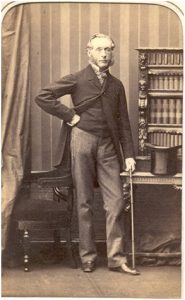 The only part he took in public affairs was as a Magistrate andDeputy-Lieutenant. He was a frequent chairman of Quarter Sessions. Unlike his brothers, Lord Cranbrook and Sir John Hardy, Mr Charles Hardy was of a remarkably diffident disposition, and was never more ill-at-ease than when called upon to speak in public. When he did speak, however, it was so evident that he spoke from the conviction and sincerity of his heart that he was always listened to with respect. Unostentatious, kind and considerate, he was regarded with honest affection by the Low Moor workpeople, and when he died at Chilham Castle, Kent, in 1867, the event was deplored by all who had known him.”
Charles Hardy was ‘examined’ by a Child Employment Commission in 1841, in his capacity as ‘principal proprietor of the Low Moor Iron Works’. (See Appendix 1: Child Employment Commission; Appendix 2: Charles Hardy: Census for Odsall House 1841, 1851, 1861)
Gathorne Hardy (1814 -1906) was born in 1814, and his father determined him for the Law. In 1838 he married Jane, another daughter of Mr James Orr, of Hollywood House, County Down, Ireland. Two Hardy brothers marrying two Orr sisters! Gathorne and Jane together had four sons and five daughters. Gathorne’s father was under the impression that his son’s natural abilities would find more congenial occupation in advocacy than in dancing attendance upon the furnaces and forges of Low Moor. Thus it came that Mr Gathorne Hardy in a measure alienated himself from the celebrated ironworks from which his family’s immense wealth had chiefly sprung. He paid frequent visits to Low Moor, and stayed there occasionally for a lengthened period, but he never identified himself thoroughly with the management of the establishment as did his brothers, nor as his father or grandfather had done. He held very important positions in connection with the government of the country. He entered Parliament for Leominster in 1856 and continued to sit till 1878, when he was raised to the Peerage under the title of Viscount Cranbrook.He retired after the election of 1895. Gathorne Hardy died in1906.
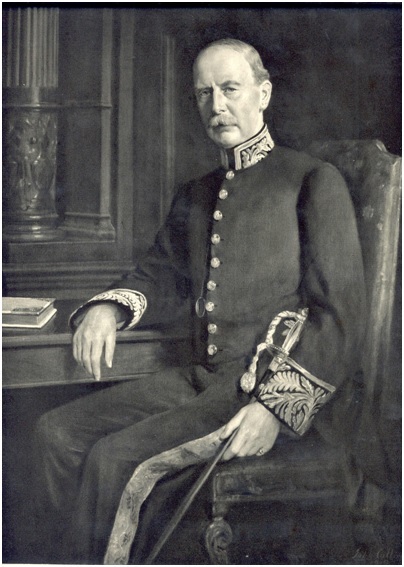
Rt. Hon. Laurence Hardy (1854 – 1933)
Rt. Hon. Laurence Hardy was born on 14th April 1854. He was the fourth andyoungest son of Sir John Hardy 1st Baronet and Laura Holbech. He graduated from Oxford with an MA. He took an active part in the management of the Low Moor Works for many years, and also taught in the Company’s school. In 1886 Laurence Hardy married Evelyn Emily Wood, together having one daughter and two sons and in 1891 they were living in Royds Hall. He was JP for the West Riding of Yorkshire. Laurence Hardy also held the office of MP for South Kent between 1892 and 1918. He was Deputy Lieutenant of the county of Kent. He served as Deputy Chairman of Ways and Means in the House of Commons in 1905. He was Ecclesiastical Commissioner in 1918. Despite being a Conservative MP, Laurence was invested as a Privy Counsellor by David Lloyd George, then a Liberal MP and Deputy Speaker of the House of Commons. Rt. Hon. Laurence Hardy was also Honorary Seneschal of Canterbury Cathedral in 1930. He had left Yorkshire to reside at Sandling Park, Hythe, Kent in 1897, and was responsible for beginning the development of the now Grade 2 Heritage garden, 25 hectares of woodland garden.
He died on 21st January 1933, aged 78.
He was also the godfather of Laurence Carey Hardy (b.1929-living) and gave him a silver napkin ring as a christening present which he still uses. (See Appendix 3: LaurenceHardy: Royds Hall Census 1891, Appendix 4: Laurence Hardy at Sandling Park)
The Hon.Harold Hardy was born in 1850, the fourth and youngest son of the Earl of Cranbrook, and was for several years the Manager of the Low Moor Company and also a partner. He resided at Low Moor House and took an active part in the well-being of the inhabitants. He was the first Chairman of the Enclosure Commissioners, for enclosing the Commons of Wibsey and Low Moor. Harold Hardy was a most estimable gentleman, and was highly respected by all who knew him. He died on 11th June 1881. Harold Park, Low Moor, was named after him, for the public services he had rendered in the formation of the Park.
The Harold Club
The Harold Club near to St. Mark’s Church, an excellent workingmen’s’ institution, was erected at a cost of over £2000 by his father, Lord Cranbrook and family, as a further memorial to the late respected gentleman. Harold Hardy is interred at Bevenden Church, near Hemsted Park, Kent, the seat of his father.
Appendices.
1 Child Employment Commission: Interview of Charles Hardy 1841 [view here]
2 Charles Hardy: Odsall House Census 1841 1851 1861 [view here]
3 Laurence Hardy: Royds Hall Census 1891 [view here]
4 Laurence Hardy at Sandling Park [view here]
